Artificial intelligence, digital twins, smart infrastructure, connected mobility, sustainability, resilience and data-driven decision making are rapidly reshaping how cities, communities and organisations operate.
Yet while investment in smart city initiatives continues to accelerate globally, many professionals find themselves asking a simple question:
What exactly is a smart city, and how do all these technologies fit together?
The reality is that smart cities are no longer the responsibility of a handful of technology specialists or urban planners. Today, smart city principles influence decisions across government, infrastructure, property development, utilities, transport, health, education, sustainability and economic development.
For professionals seeking to stay relevant in an increasingly connected world, understanding the foundations of smart cities has become an important capability.
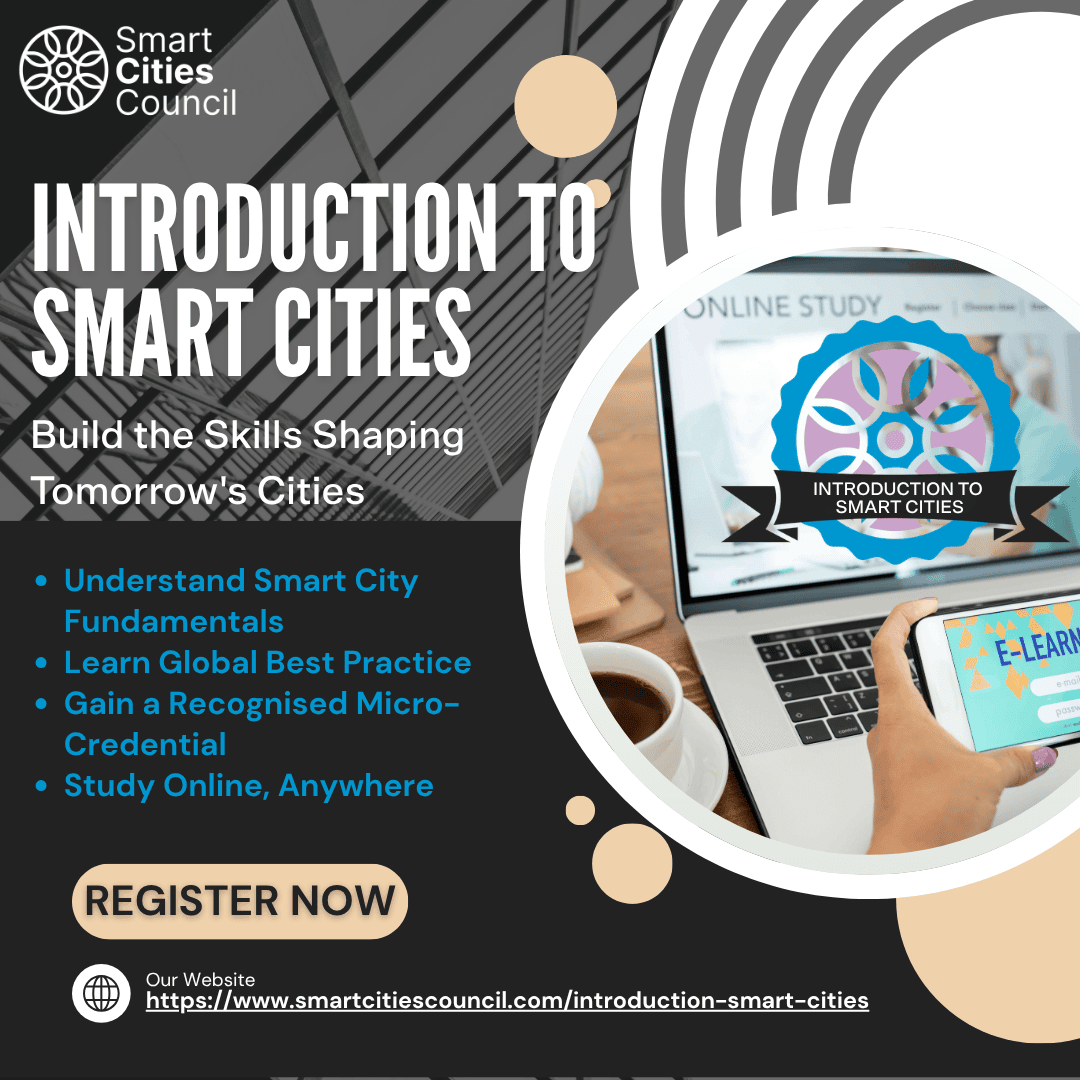
That is why Smart Cities Council developed the Introduction to Smart Cities course — a practical online micro-credential designed to provide participants with a clear understanding of the concepts, frameworks, technologies and strategies shaping the future of cities and communities.
Why This Course Matters
Across the globe, organisations are investing billions of dollars in digital transformation, artificial intelligence, smart infrastructure and sustainability initiatives. Yet many projects struggle because stakeholders lack a shared understanding of what a smart city is trying to achieve.
Successful smart cities are not simply about technology.
They are about creating better outcomes for people, improving quality of life, increasing sustainability, enhancing resilience and enabling smarter decisions through data and collaboration.
This course provides participants with the knowledge needed to understand these connections and confidently engage in smart city discussions, projects and strategic planning.
What You Will Learn
Participants gain a practical introduction to:
- Smart city definitions, principles and global trends
- Key technologies driving urban transformation
- Governance, policy and leadership considerations
- Data, digital infrastructure and emerging technologies
- Smart city frameworks and international standards
- Global case studies and lessons learned
- Future opportunities and challenges facing cities and communities
The course has been designed to be accessible to professionals from a wide range of sectors and experience levels.
Who Should Attend?
This course is ideal for:
- Government and public sector professionals
- Urban planners and city leaders
- Infrastructure and engineering professionals
- Technology and innovation specialists
- Sustainability and ESG practitioners
- Consultants and advisors
- Property and development professionals
- Students and emerging leaders
- Anyone seeking to better understand the future of cities
Whether you are beginning your smart cities journey or looking to strengthen your existing knowledge, the course provides a valuable foundation for future learning and professional development.
Invest in Your Future
The pace of change across cities and communities is only accelerating.
The professionals who understand how technology, governance, infrastructure and people intersect will be best positioned to lead the next generation of urban transformation.
The Introduction to Smart Cities course provides a practical starting point, helping participants develop the knowledge, confidence and perspective needed to contribute to smarter, more sustainable and more connected communities.
Ready to Start Your Smart Cities Journey?
Join professionals from across government, industry and academia who are building the skills needed to navigate the future of cities.
Learn more and register for the Introduction to Smart Cities course today.
For more information on Smart Cities Council programs: