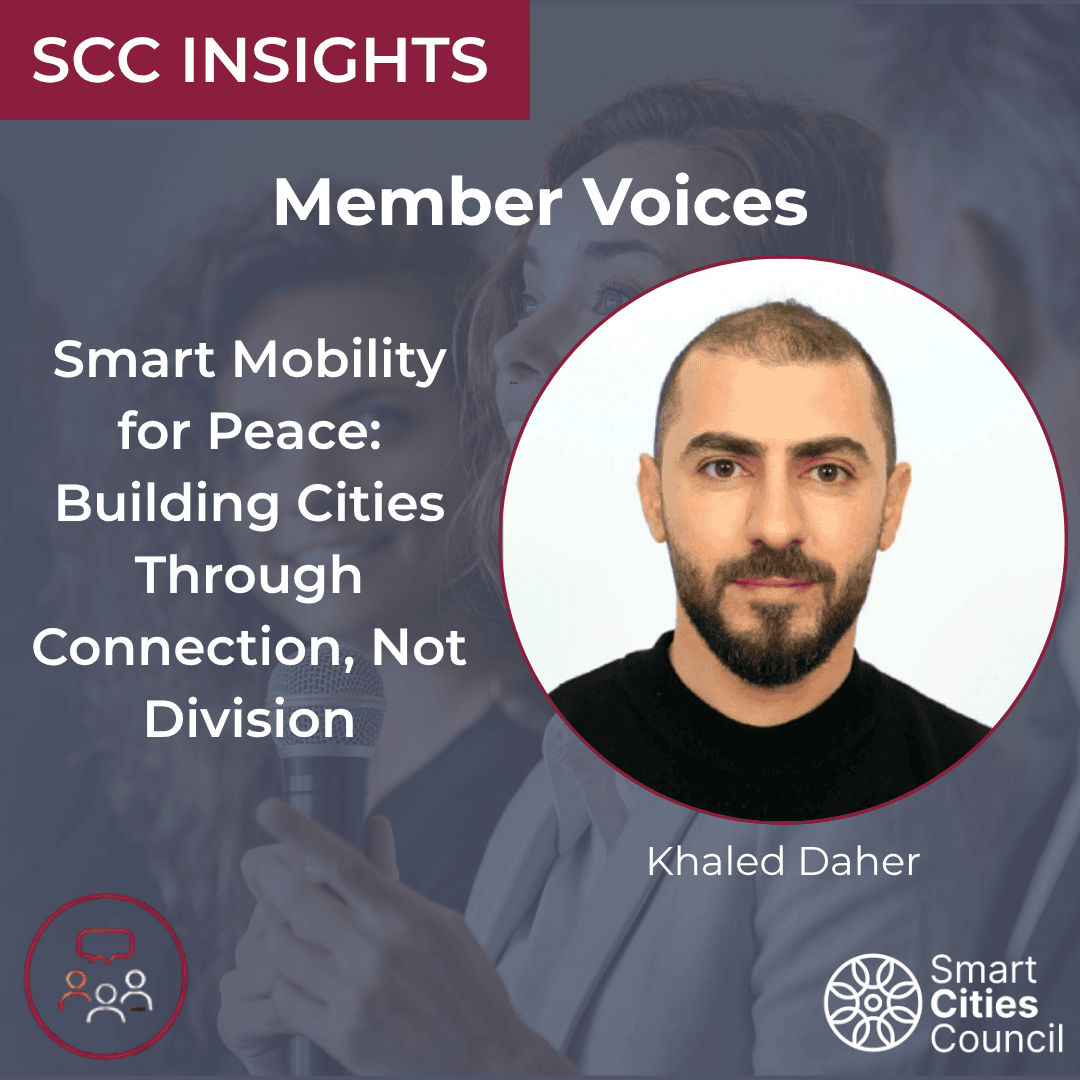
By Khaled Daher
Context
Cities today face growing challenges including congestion, inequality, environmental pressure, and increasing demands on infrastructure. At the same time, communities are looking for safer, more connected, and more inclusive urban environments.
Smart mobility is no longer only about transportation. It has become a key part of how cities create opportunity, improve quality of life, and strengthen connections between people, cities, and regions.
What’s Happening
Around the world, governments and city leaders are investing in metro systems, railways, electric mobility, and integrated transportation networks. New technologies are helping cities improve operations, reduce congestion, and support sustainability goals.
However, successful mobility projects are not defined only by technology. Their real value appears in the daily lives of citizens.
From my experience working on railway and urban mobility projects including Riyadh Metro, Cairo Monorail, and the current Jerusalem Light Rail project with CAF, I have seen how transportation systems directly impact communities and daily life. Efficient mobility helps students reach universities, employees access jobs, businesses grow, and families connect more easily across cities and regions.
One important example is the Jerusalem Light Rail project, where the transportation network connects multiple neighborhoods and communities across the city through shared infrastructure and daily mobility. Beyond transportation itself, projects like these show how connected urban systems can support accessibility, interaction, and better opportunities for citizens from different backgrounds through everyday movement and shared public spaces.
Today, I also contribute as a lecturer at ZIGURAT Institute of Technology, where we work with international students and professionals on topics related to smart cities, smart mobility, AI, blockchain, and sustainable urban development. One important lesson from both industry and education is that future mobility systems must focus not only on technology, but also on people, accessibility, and long-term urban resilience.
The Middle East is also entering a new phase of regional connectivity. Large-scale railway and smart mobility initiatives are creating opportunities for stronger integration between GCC countries and neighboring regions. Projects such as the GCC Railway reflect a growing vision for connected transportation networks that support economic growth, tourism, trade, sustainability, and accessibility across the region.
Looking ahead, future regional mobility corridors through Jordan, Palestine, and Israel could also play an important role in strengthening connectivity between communities and cities. Beyond transportation itself, these connections have the potential to support economic cooperation, cultural exchange, accessibility, and long-term regional resilience through shared infrastructure and smarter urban development.
The broader vision is not only about moving passengers or freight. It is about building a regional mobility ecosystem where infrastructure supports economic opportunity, accessibility, sustainability, and cooperation between neighboring communities.
Why It Matters
Poor mobility affects much more than travel times. It impacts productivity, public health, environmental performance, and social inclusion. Cities that struggle with accessibility often experience economic gaps between communities and reduced opportunities for citizens.
Connected cities create stronger societies.
Public transportation and integrated mobility systems encourage accessibility, reduce emissions, and support more sustainable urban growth. They also help create more equal access to services, education, healthcare, and employment.
The current challenges across parts of the Middle East have also shown how essential resilient infrastructure and connected cities truly are. During periods of instability, mobility becomes more than transportation — it becomes access to healthcare, education, economic recovery, and daily life continuity.
As cities plan for recovery and future growth, there is an opportunity to rethink urban development through smarter, more sustainable, and more connected mobility systems. Smart cities built around accessibility, cooperation, and shared infrastructure can help create environments that support stability, opportunity, and long-term resilience for future generations.
Technology alone cannot build better cities. Cities become stronger when infrastructure is designed around people, accessibility, and long-term community value.
Key Takeaway
The future of smart cities depends not only on digital transformation, but also on human connection.
Smart mobility should be viewed as more than transportation infrastructure. It is a foundation for resilient, inclusive, and sustainable cities.
Cities that invest in connected mobility systems are also investing in opportunity, cooperation, and stronger communities for future generations.
About the Author
Khaled Daher is an international speaker, smart mobility strategist, and technology thought leader specialising in smart cities, railway systems, autonomous mobility, artificial intelligence, blockchain, and sustainable urban development.
He currently serves as Railway General Installation Manager at CAF (Construcciones y Auxiliar de Ferrocarriles), supporting large-scale railway infrastructure and mobility projects focused on future-ready transport systems and connected urban environments.
Khaled is also a Lecturer at ZIGURAT Institute of Technology, contributing to international programs in smart cities, artificial intelligence, blockchain, and emerging technologies shaping the future of architecture, engineering, construction, and urban development.
Passionate about connecting technology, mobility, infrastructure, and people, Khaled is recognised for helping organisations and cities navigate the transition toward smarter, safer, and more sustainable urban ecosystems worldwide.
For more information on Smart Cities Council programs: