CEO and Founder, Core Integrity
Chief Integrity Officer, Smart Cities Council
Why a safe speak-up culture has become a global business risk issue and what every CEO, founder and board needs in place.
For years, psychological safety lived in the wellbeing column. A leadership ideal. An HR topic. A line in the engagement survey.
That era is closing.
Across major economies, psychological safety is being reframed as a business risk. Not because regulators have suddenly noticed it, although many have. Because the cost of getting it wrong now shows up everywhere that a CEO, a board director and an investor cares about: workers compensation claims, lost time, manager burnout, rising complaints, more workplace investigations, productivity drag, and quiet attrition from people who have stopped trusting the place they work and simply checked out.
And in the worst cases, people stop speaking up at all.
That is the moment leaders lose their early warning system.
They do not hear about bullying until it becomes a formal complaint. They do not hear about unsafe workloads until someone breaks. They do not hear about poor conduct until it is already normalised inside the team. They don’t hear about unsafe workplace practices until someone is injured or worse, killed.
By then, the problem is more expensive, more emotional, and harder to fix. Depending on the issue, sometimes this can be the beginning of a long hard road for the organisation and one that could have been avoided.
This is why psychological safety is no longer a soft issue.
It sits at the intersection of culture, risk, governance and performance. And it is now an issue for CEOs, boards and investors who back entrepreneurs no matter where the business operates.
The global direction of travel.
The signal is consistent across very different legal systems.
In the United Kingdom, the Health and Safety Executive treats work-related stress as a legal duty: employers are expected to assess and act on the risk, not manage the fallout.
Canada has had a National Standard for Psychological Health and Safety in the Workplace for more than a decade, giving organisations a framework for preventing psychological harm rather than reacting to it.
In Australia, the model work health and safety laws require businesses to manage psychosocial hazards including job demands, poor support, bullying, harassment and workplace violence — and regulators have backed it with prosecutorial intent.
In the United States, the picture is more fragmented, but the direction is the same. California now requires most employers to maintain a workplace violence prevention plan, with formal reporting processes, training, hazard assessments and incident logs — all of which sit inside the broader psychosocial risk conversation.
The Middle East is moving too. The UAE's Federal Law No. 10 of 2023 protects the rights of people living with mental health conditions, with commentary highlighting employer exposure where these matters are not handled through proper channels. Saudi Arabia's occupational fitness frameworks now reference psychological as well as physical fitness for work.
Different jurisdictions. Different legal architecture. Same message.
Psychological harm at work is no longer a personal issue, a resilience issue or an HR clean-up job. Organisations are expected to identify the risks, implement adequate controls to manage or mitigate those risks, listen when people raise concerns, and act before harm escalates.
Putting your head in the sand and doing nothing is no longer an option.
Speak-up culture is the missing link.
Most organisations already have the window dressing in place. Policies. Values on the wall. Mental health awareness training. An employee assistance program. A grievance process (that is often out of date, overly complex and not well understood!).
That is necessary. But it’s not sufficient to mitigate risk.
The real test is whether your people trust the system you have put in place enough to use it.
Can a junior employee report bullying by a top performer without fearing career damage? Can a manager admit their team is drowning with workloads and unreasonable deadlines before the cracks appear? Can someone challenge poor conduct or unreasonable demands without being labelled difficult or a complainer? Can concerns be raised early and informally, before they become formal complaints or legal claims? Do managers and leaders take the right action the first time or do they sweep it under the rug and hope for the best?
This is where speak-up culture meets psychosocial risk.
A psychologically safe workplace is not one where everyone agrees, avoids hard conversations or feels comfortable all the time. Good businesses still need pressure, challenge, performance standards and accountability. The difference is that people can speak honestly about risk, behaviour, workload and harm without fear of punishment or silence.
When people speak up early, you get options. When they stay silent, you get surprises.
In my experience leading workplace investigations and workplace culture reviews across many sectors, the most damaging matters almost always have the same fingerprint. Someone tried to flag it earlier, in a smaller way, and the system and leaders did not respond. By the time it lands as a formal complaint, a regulator notification or a piece of litigation, the cost has multiplied many times over and now impacts the organisation financially, reputationally, and in a degradation of trust.
What good organisations actually have in place.
The framework is straightforward. The discipline to deliver it is what separates strong organisations from the rest.
Set the standard. Policies need to define what good behaviour looks like, what is not acceptable, how concerns can be raised and what people can expect when they do actually speak up. This includes codes of conduct, bullying, harassment, discrimination, whistleblowing, grievances, health and safety, conflicts of interest and investigations. A policy is the starting line, not the finish line. If people do not know it exists, do not understand it, or do not believe it will be applied fairly, it is not doing useful work. As the old saying goes “it’s not worth the paper it’s written on”
Equip your managers. Most psychosocial risk is shaped day to day by your managers. How they allocate work. How they respond to pressure. How they react when someone says “I am not coping” or “Something is not right here.” That moment matters. A poor response shuts down trust across the team. A good response stops a small issue becoming a formal dispute. Training should not be fluffy. Leaders need practical capability in recognising hazards, managing complaints, having hard conversations and escalating risk without defensiveness. Managers need to be supported and coached by strong leaders.
Make it safe to speak. Independent speak-up channels, whistleblower hotlines, grievance pathways and clear reporting processes exist for one reason - to make it easier for people to raise the right concern, through the right channel, at the right time. Not every concern is a whistleblower matter. Not every issue needs a full investigation. But every concern needs to land somewhere sensible. If your people do not know where to go, or they think nothing will happen, they will either stay silent or go outside the organisation. Neither serves you and only lead to worse outcomes over time.
Make it worth speaking. This is where most businesses fall down. They encourage people to speak up, then struggle to respond when they do. Complaints sit unresolved. Managers freeze. HR gets overloaded. Legal gets pulled in late. Investigations take too long. Communication is clumsy. Confidence collapses. In my experience, a poor response often causes more damage than the original issue itself. Organisations need clear triage, trained decision-makers, investigation capability, fair processes and enough capacity to handle matters properly the first time. Unfortunately, organisations don’t invest adequately in the right resources to deal with the level of complaints, grievances and investigations most organisations deal with.
Read the patterns. One complaint may be a one-off. Five complaints from the same business unit usually tells us something else is going on here. Strong organisations do not just count complaints. They look at hot spots, repeated conduct themes, high-turnover teams, absenteeism, exit interview signals, and silence from areas where you would expect more reporting. The real insight sits in the patterns, not in any individual report.
The leadership shift
Psychological safety is not about making work easy. It is about making risk visible.
The goal is not to remove every source of stress or discomfort from work. That is neither possible nor desirable. The goal is to design work, systems and leadership practices so that foreseeable harm is identified early, managed properly, and not allowed to fester in silence.
A safe speak-up culture gives leaders a fighting chance. It surfaces what is really happening and if done well, gives leaders a chance to intervene early. It gives employees confidence that concerns will be taken seriously. It reduces the likelihood that hidden issues become claims, investigations, resignations or reputational damage. It ensures that bad behaviours don’t become entrenched overtime which leads to a gradual change in the organisational culture, often not for the better I might say.
The organisations that get this right will not be the ones with the glossiest wellbeing campaigns. They will be the ones where people trust the process, leaders know what to do, and concerns are dealt with before they become expensive, public, or both.
For any CEO, founder or investor reading this, the question is not whether your business is exposed to psychosocial risk. The truth is every business is. The question is whether you are hearing about it in time to do something about it.
If your people are silent, you are not safe. You are just uninformed.
About the author
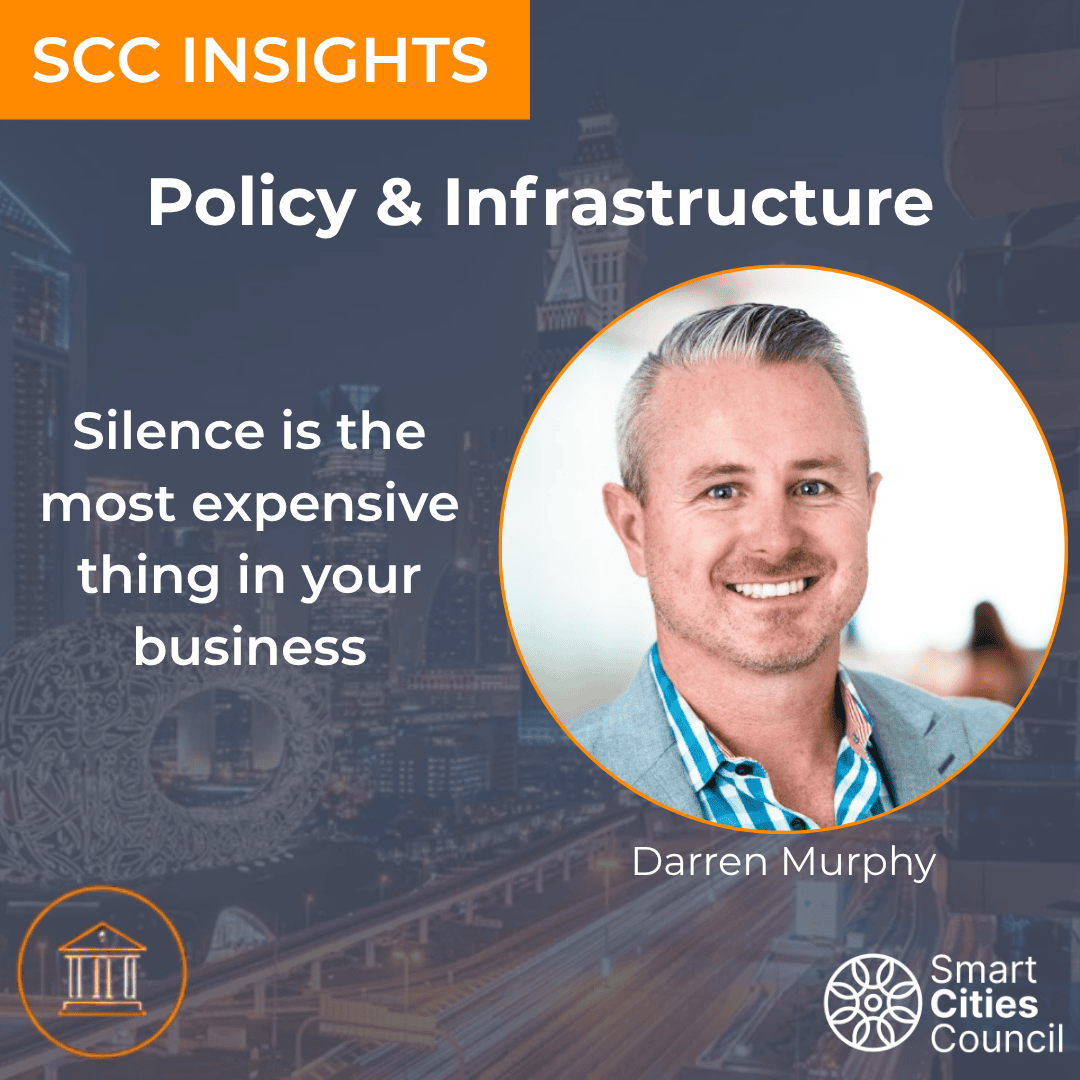
Darren Murphyis Chief Integrity Officer for Smart Cities Council, and CEO and Founder of Core Integrity. With a background in law enforcement and investigations, Darren draws on direct operational exposure to thousands of workplace conduct matters — delivering critical services around workplace integrity, speak-up culture, psychosocial risk and culture transformation.
In partnership with SCC Advisory Darren and Core Integrity supports members, partners and the broader Smart Cities Council global network with workshops, programs and services that deliver world’s best practice in integrity and related disciplines.
Learn more at coreintegrity.com.au
For more information on Smart Cities Council programs: