
Article by Len Costantini / Tremendi
A practical guide for city leaders, developers, planners, precinct operators, smart cities practitioners, and investors ready to tackle high-friction transport gaps head-on.
Following our recent Founder in Focus spotlight on Reelo, which explored how AI-driven customer intelligence is helping cities and businesses better understand urban behaviour, the series now turns to another critical challenge for modern cities: mobility.
In this second edition, we feature SNAAP Transportation, a company exploring how personal rapid transit systems could help cities solve some of their most persistent urban mobility bottlenecks.
Rethinking Mobility: From Moving Vehicles to Moving People Smarter
As a decision-maker in urban development or operations, you're likely grappling with the same frustrations: persistent congestion, rising emissions, parking demands, and user complaints about inefficient last-mile or intra-precinct travel—all while budgets tighten and expectations for sustainable outcomes grow.
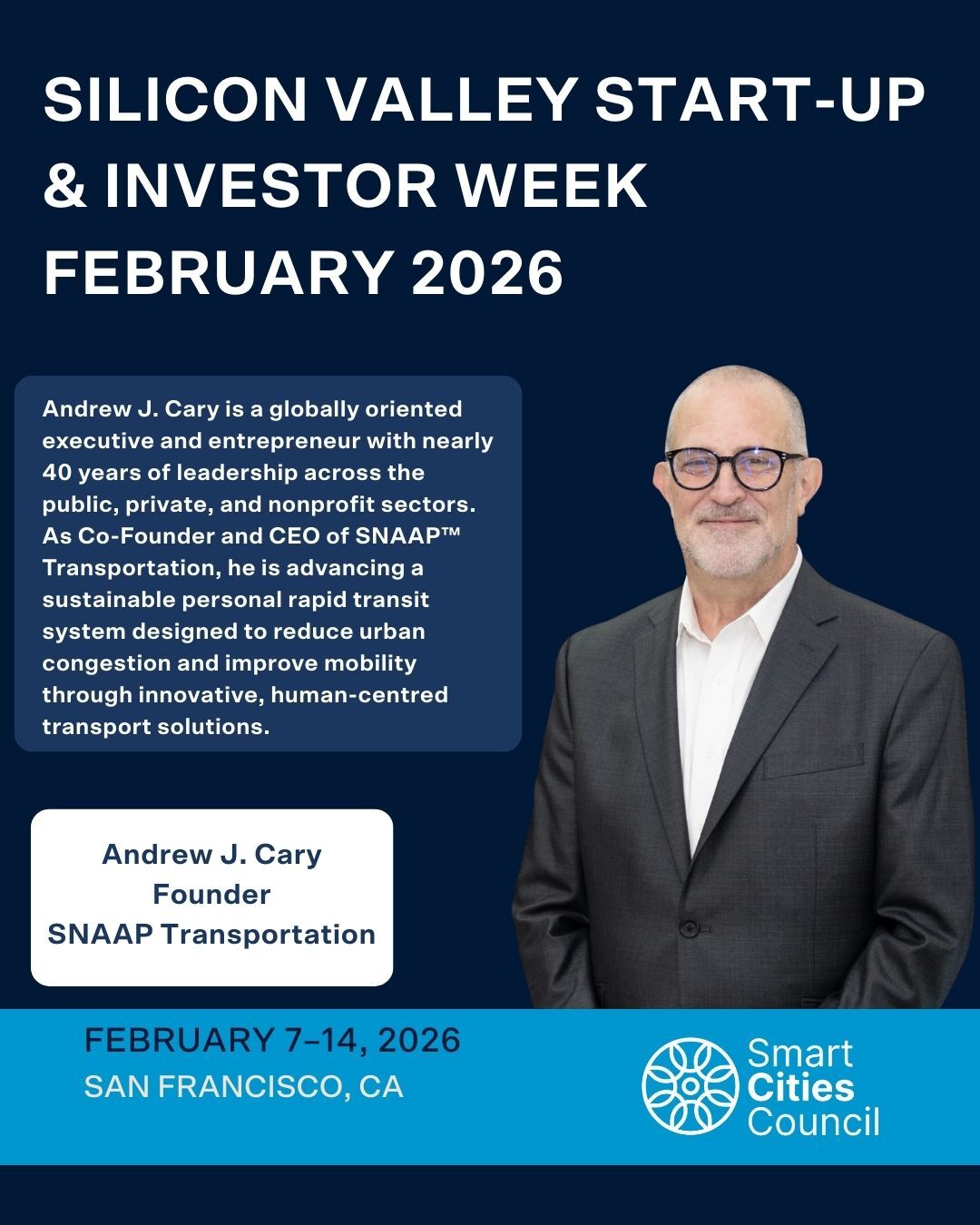
Andrew J. Cary, Co-Founder and CEO of SNAAP Transportation, gets it. With decades of cross-sector experience, he saw that 80% of road travel worldwide involves single-occupant vehicles—and that's the root of much of today's traffic chaos. His response? SNAAP — Sustainable, Nonstop, Autonomous, Affordable, Personal rapid transit — a targeted system that redefines urban mobility without requiring massive new road networks.
SNAAP isn't about replacing your entire transit ecosystem. It's a smart, complementary middle layer designed precisely for the high-friction corridors, precincts, and connection points where conventional options fall short.
Why Targeted Personal Rapid Transit Wins in Today's Cities
Traditional "predict-and-provide" approaches (more roads → more cars → more congestion) are failing. SNAAP flips the script with small, autonomous pods on dedicated, often elevated guideways—delivering nonstop, point-to-point travel at a fraction of the cost and disruption of light rail, bus rapid transit, or highway expansions.
The result?
·Dramatically reduced wait times and friction in key zones
·Lower energy use and emissions through efficient, shared infrastructure
·Enhanced user experience that builds public support for sustainable mobility
·Scalable deployment starting small and proving value fast
Perfect Fit for Your Highest-Pain Environments
SNAAP shines where mobility gaps hurt most:
·Airports & transport hubs — seamless connections to hotels, parking, rental cars, reducing shuttle dependency and improving passenger satisfaction
·Hospital complexes — faster, stress-free movement for patients, visitors, and staff across sprawling campuses
·Entertainment venues & event precincts — reliable access that boosts attendance and revenue
·University & college campuses — linking dorms, lecture halls, research facilities, and remote parking
·Micro-distribution & logistics — efficient last-mile people + goods movement
These aren't theoretical. Recent partnerships, including a strategic joint venture in EMEA with My NEO Group (announced via the Smart Cities Council, show SNAAP advancing toward real-world implementation in high-impact settings.
A Human-Centered, Practical Path Forward
Corey Gray of the Smart Cities Council captures it well: smart cities succeed by solving real human problems practically and scalably. SNAAP aligns perfectly—intuitive, accessible, trustworthy pods that people actually want to use, while delivering measurable operational and environmental wins for operators and cities.
Deployment is modular and phased: start with a pilot in one bottleneck corridor, measure results (time savings, user adoption, cost efficiency), then scale. No mega-project risk—just targeted innovation where it counts.
Ready to Explore How SNAAP Fits Your Needs?
If you're tired of incremental fixes and want to lead on future-ready mobility, SNAAP Transportation is actively seeking conversations with forward-thinking partners:
·City and precinct operators evaluating next-gen solutions
·Developers and planners integrating mobility into master plans
·Investors looking for sustainable, high-upside transport plays
The team is open to discussing pilot opportunities, model sites, feasibility studies, or investment pathways. Many early collaborators are already shaping deployments in model cities and sites.
Take the next step today:
·Visit ridesnaap.com to explore use cases, videos, and resources
·Sign up for the SNAAP newsletter for updates on pilots, partnerships, and exclusive insights
·Reach out directly: email info@ridesnaap.com or connect with Andrew J. Cary via the site
The future of urban mobility isn't about bigger infrastructure—it's about smarter, more accessible layers that work now. SNAAP is ready to build that with you. Let's talk about turning your mobility bottlenecks into competitive advantages.
About Smart Cities Council
Smart Cities Council is a global network of cities, governments, technology leaders, investors, and solution providers dedicated to enabling city and community transformation through governance, finance, technology, and partnerships that deliver measurable outcomes.
For more information on Smart Cities Council programs: