Article by Len Costantini / Tremendi
In our previous Founders in Focus feature, we explored how Helixis is addressing one of the most pressing challenges in smart cities — making autonomous systems more accountable. Because as cities become more connected, the question is no longer just what systems can do, but how we ensure they operate transparently, responsibly, and in the best interests of the communities they serve.
But accountability is only possible when there is visibility. Before systems can be governed, optimised, or trusted, organisations need to clearly see what is happening across their infrastructure — often in environments where critical issues remain hidden until the impact is already significant. This is where the next layer of the smart cities stack becomes essential.
In this edition of Founders in Focus, we explore how AVVISTA is helping make leaks, water, energy, and resource use more visible — so organisations can save money, strengthen accountability, and make reporting easier.
For organisations looking for more practical ways to reduce loss, improve visibility and manage essential resources, this is a story about turning hidden problems into earlier action through intelligent monitoring.
AVVISTA: Supporting communities to save water, energy and money
The story starts with a problem many councils, utilities and site operators know too well. A hidden leak sits out of sight. Water is lost around the clock. Costs rise. Damage grows. Often, no one has clear visibility until the bill arrives or the consequences become harder and more expensive to manage.
That is the kind of problem AVVISTA was built to solve.
In one early deployment, a concealed underground leak in a parkland-style environment was detected at 647 litres per minute, or the equivalent of USD $150 over a 3-month billing cycle.
Because the issue was made visible early, the customer was able to act quickly, prevent further water waste and avoid substantial ongoing cost. It is a practical example of how better visibility helps reduce waste and save money.
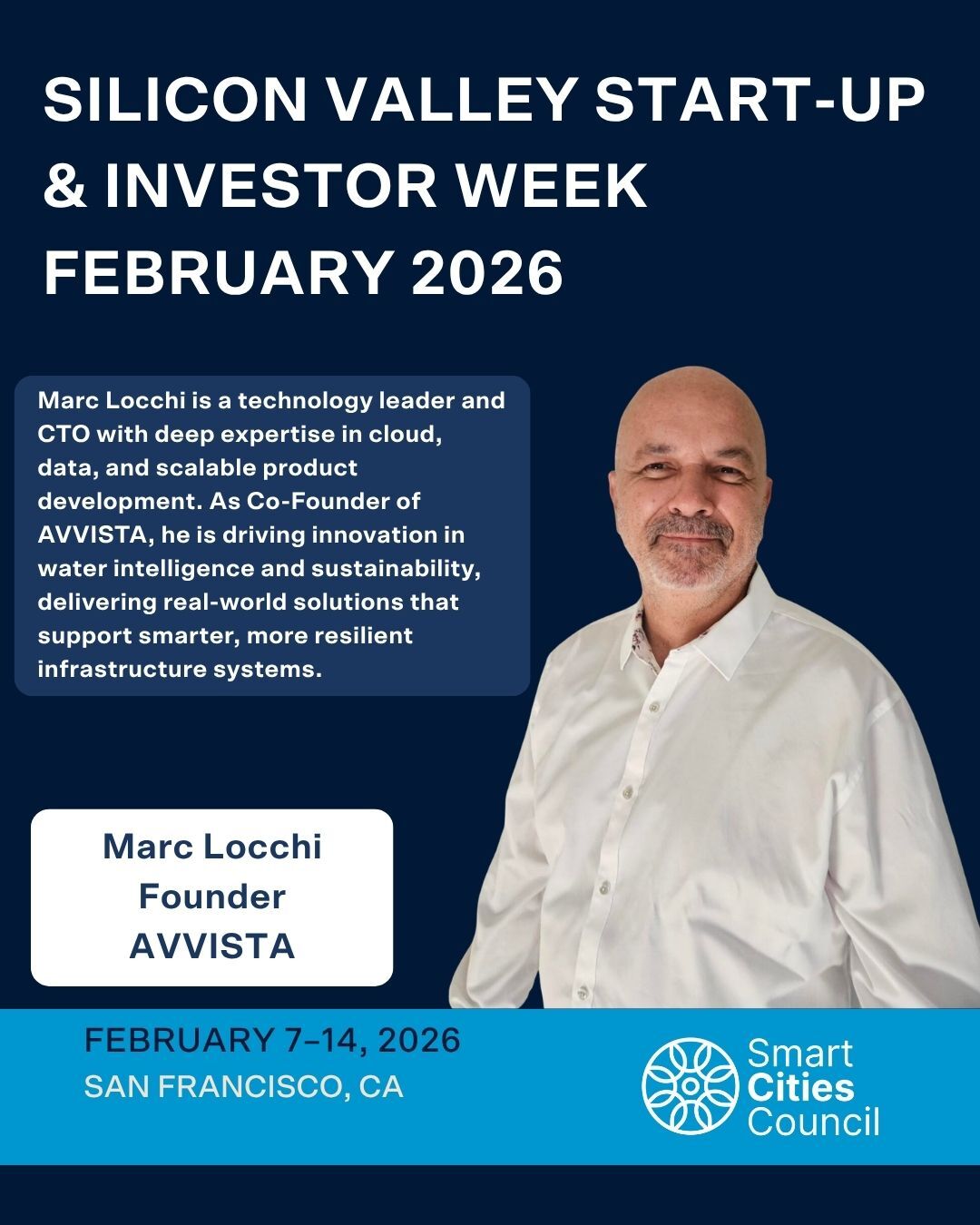
For AVVISTA Co-founder and CTO Marc Locchi, that is the bigger purpose behind the platform: helping organisations protect finite resources, make better decisions and deliver better outcomes for the people and communities they serve.
How AVVISTA helps
- earlier detection of leaks and abnormal use
- clearer visibility across water, energy and gas use
- sub-billing visibility across multi-tenancy environments such as shopping centres
- better operational and financial decision-making
- support for ESG goals and stronger accountability
- simpler reporting across complex sites and networks
- more confident day-to-day resource management
Turning hidden loss into practical action
The starting point for AVVISTA was always the customer problems.
“We kept coming back to the same issue,” says Locchi. “Too often, customers are dealing with waste, cost and risk that stay invisible until the damage is already done. We wanted to build something that helps them see sooner, respond sooner and manage resources with much more confidence.”
That thinking shaped AVVISTA from the start. Before launching, the team spent significant time in research, development, pilots and industry consultation to better understand how councils, utilities, commercial operators and industrial users manage assets, data and reporting in the real world.
Built to turn visibility into action
The result is a platform designed not just to collect data, but to help people act on it.
Rather than building another system that simply adds more information, AVVISTA was developed to make it clearer, more usable and more relevant to the people responsible for decisions on the ground.
AVVISTA started with a simple principle: make hidden issues visible early enough for people to do something useful about them.
Integrated resource monitoring
That water-services foundation remains, but the platform has since evolved into a more integrated resource management tool that helps organisations better understand and manage water, energy and gas use.
The value is not only in what gets measured, but in how usable the information becomes.
“If monitoring is going to be useful, it has to work for the people carrying operational responsibility,” says Locchi. “That means the solution has to be practical, comprehensive, easy to use, and able to scale without adding unnecessary complexity.”
In practice, AVVISTA helps organisations monitor hidden loss, utility consumption patterns, water quality and pressure indicators where available, and help manage the exceptions that require action.
Supporting smart city outcomes
For smarter cities, there is also a broader public value story here including resilience and carbon reduction. Research around the water-energy nexus has shown that saving water can also reduce the energy needed to pump, treat and, in some settings, heat that water.
In other words, better water efficiency can also support carbon efficiency.
“That is exactly how we see it. When organisations reduce hidden loss and improve visibility, they are not just saving water. They can also reduce the energy needed to move, treat and manage that water, which can help lower associated greenhouse gas emissions," says Locchi.
That matters because water efficiency is not only a resource outcome. It can also support lower avoidable costs, reduced emissions and stronger ESG accountability.
Consequently, AVVISTA evolved beyond leak detection alone to give councils, utilities, facility operators and site managers a more practical way to understand and manage water, energy and gas use.
It provides better information to support day-to-day decisions as well as longer-term reporting and sustainability goals.
Who benefits most clearly
Water providers and the customers they serve
For water utilities, councils and state-linked providers, the need is for better visibility across networks, faster response to loss, stronger stewardship of community resources and more confidence in planning and capital prioritisation. The flow-on benefit is better service for residents, customers and communities who rely on those systems every day.
Commercial and public sector facilities
For precincts, campuses, major sites and multi-site portfolios, the priority is better control across water, energy and gas use, clearer cost visibility, simpler reporting and earlier identification of issues before they become bigger operational or financial problems.
Communities, economies and the environment
Water is life, and water resilience matters far beyond utility performance alone. It matters for the health of communities, the strength of local economies and the protection of the environment. When cities and regions manage water more wisely, they are not only reducing waste. They are supporting more resilient communities and better long-term outcomes.
A shared challenge
Across all three, the challenge is similar: important signals are often fragmented, delayed or difficult to act on. Better visibility helps organisations respond earlier and make more confident decisions.
Better decisions for essential services
AVVISTA’s approach is grounded in something practical: giving managers and decision-makers clearer operational visibility and insights.
“The customer has to stay at the core,” says Locchi. “Whether it is a council water team, a regional utility, a facility manager or a site operator, the question is the same. How do we help them see issues sooner, manage resources better, save money and make better decisions?”
It is a timely question. Water scarcity, ageing infrastructure, rising costs, compliance expectations and community pressure are all increasing. Hidden losses remain one of the hardest and most expensive problems to solve because they often stay undetected until the consequences are already significant.
Making water intelligence more accessible for cities and regions
For councils, utilities and public sector operators grappling with leakage, waste, rising costs or fragmented data, the need is increasingly clear: better visibility, earlier intervention and more confidence in decision-making.
That is where AVVISTA can help: by making complex resource data easier to understand, easier to act on and more useful in protecting finite resources, public budgets and community outcomes.
It reflects the kind of innovation that matters to cities and communities by linking digital capability to real operational outcomes.
Ultimately, AVVISTA is about helping communities respond earlier, waste less and manage essential resources more wisely.
Better visibility, faster decisions and stronger stewardship of essential resources are exactly the kinds of gains organisations are looking for.
Learn more
To learn how AVVISTA helps utilities, councils, public sector and commercial operators monitor water networks, reduce loss and act sooner, visit AVVISTA or contact the team @ admin@avvista.com
For more information on Smart Cities Council programs: