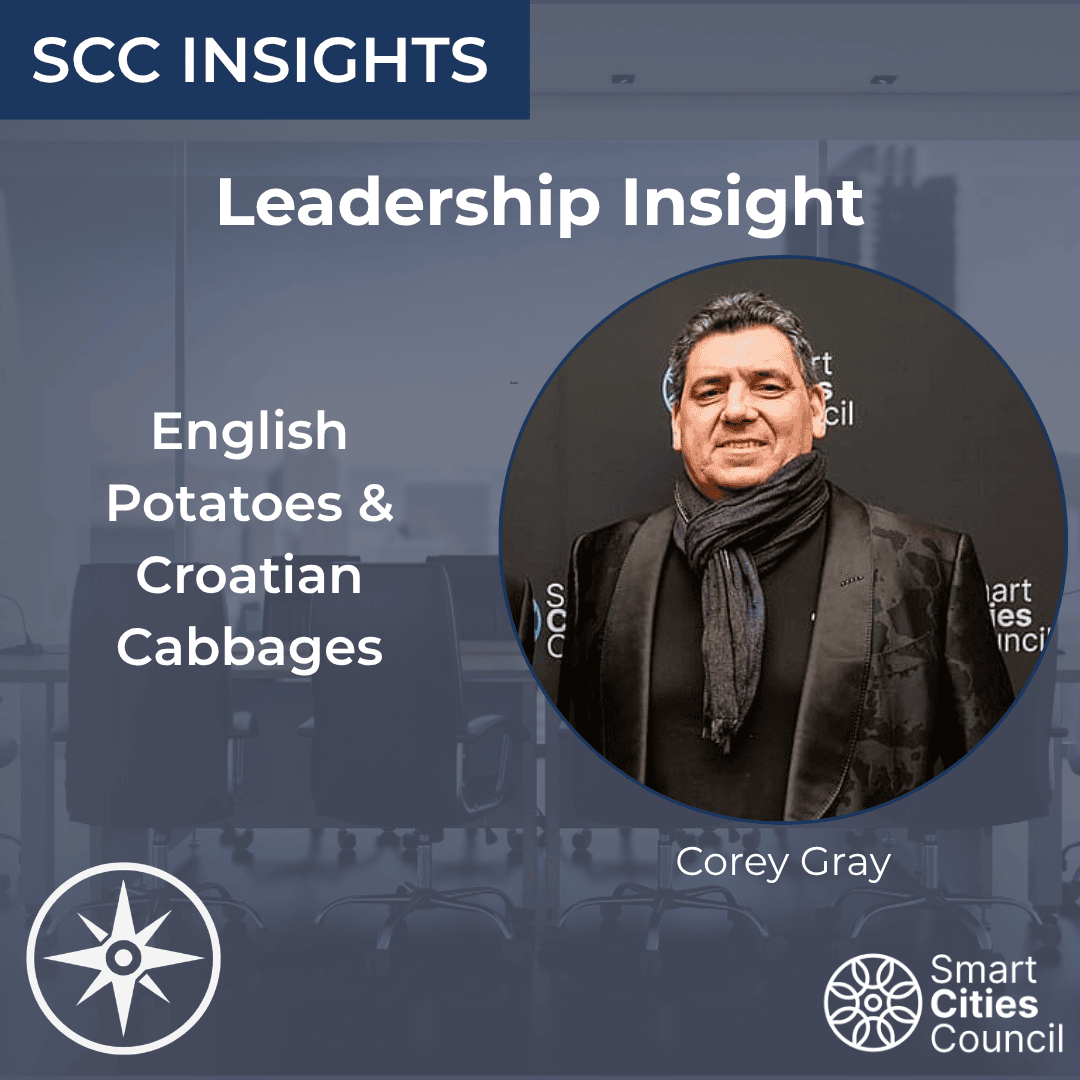
Where Bio-urbanism & Biophilia Meet, Human-centricity Takes Root
I was terribly excited about 4 weeks ago when I called the redoubtable Professor Tim Stonor. I have a poorly concealed man-crush on Tim; a hero actually for me in urban planning, architecture and the increasingly rare skill set of being a proper human.
Firstly, he answered.
Secondly, he seemed genuinely pleased to hear from me.
Thirdly, he told me the answer was “yes”, and all I had to do was ask the question.
This degree of poetic license is rarely granted to me, and, when it is, almost exclusively by sketchy strangers in the low bars of Berlin, Paris, Amsterdam and Los Angeles during movie festivals.
Despite the temptation to go in several different directions at once, I kept it strictly professional, and I am delighted that Tim has contributed the lead article in our June edition of “Urban Insights”.
When Professor Stonor informed me that his article would be about his new crop of potatoes, I was even more excited, and, logically, my mind wandered to the Roman Emperor, Diocletian, and his cabbages.
In 305 CE Diocletian became the first (and only) Roman Emperor to retire voluntarily from office, which made a dramatic change from being murdered.
The bloke wasn’t an idiot…
In his 21 years as Emperor, Diocletian managed to restore the Roman Empire from protracted anarchy and civil war to a semblance of its former self.
Upon his retirement Diocletian moved to what is now Split in modern day Croatia, where he built an enormous house – government pensions were generous and slaves were still affordable – and, among other things, he planted an enormous vegetable patch.
Within three years of his departure as Emperor, the Roman Empire had again disintegrated, and a delegation of senior Roman politicians travelled to Split to beg for Diocletian’s return to office. Famously he declined, stating:
“If you could see the cabbages I have grown with my own hands, you would not ask me to replace the peace and happiness of this place with the storms of a never-satisfied greed.”
We are revisiting these days.
Potatoes and cabbages are real.
They are useful.
When we have enough time to nurture them, these typically unremarkable staples even become beautiful.
To compare the world today – declining inexorably into a facsimile of the haphazard interplay of imperialism, anarchy war and oligarchy of Diocletian’s day – is by no means a stretch of reality.
We have seen through the current crisis that energy is extremely real.
We have seen that economics is arbitrary.
We have seen that AI is hype.
We have seen that heads of state can simply be dispatched – abducted and murdered – in plain sight. Inexplicably and despairingly, as was the case in the last days of Rome, the populus, distracted by bread and circuses, has normalized it, and desensitized themselves from it… again.
This is by no means a criticism of the people, but a lament of the circumstances that foment such circumstances.
In the first half of 2026, illness and family circumstances necessitated a sabbatical from the heady and frenetic pace of the last 3 years. This time afforded me a personal version of Diocletian’s perspective and the subsequent insight and understanding as to what is real and what isn’t; what matters and what doesn’t.
As I write, my “Diocletian designs” are fixed on a retreat in the countryside – of two countries – that produces just enough wine, first cold pressed extra virgin olive oil, citrus, seasonal stone fruit, vegetables and herbs for me to mind my own business, write, paint, play music, cook, think, love and learn – in no particular order.
I am certain that I will grow potatoes and cabbages…
I am equally certain that, in the same way, I will seed, harvest and reap the benefits of all of the beautiful relationships that I have forged in this crazy beautiful world I’ve had the fortune to circumnavigate regularly for 3 decades now.
And this is precisely the point of Tim’s potatoes. They will be the best potatoes ever because, he planted them, knows the soil, knows what type and how much water they have received – and when – how much sun they have had, and when they will be harvested. This is intimate knowledge that one only gleans from deep engagement.
The same applies to people, communities and the places that we inhabit.
When it comes to “Big Data” we must not conflate vast amounts of data, with validity, reliability and most of – causality.
Today I sit enjoying a brilliant sunset, lingering over ancient hills and set against a blinding azure sky, at the naissance of summer in my home of St Julians, Malta.
5 days ago, I sat on the precipice of winter, watching the mottled, feeble, golden autumnal northern light flickering damply through the bay window of my home of Adelaide, Australia.
I am powerfully connected to – and inspired by – both.
In this moment I realise that it is the people in their place, doing their thing, in their moment; who know who they are, where they are, what they want, what they need, who they love, how they love and when they choose to.
Earth Observation Data and Big Data is not the exclusive stuff of satellites and Mega Data Centers – it is the stuff of people and the places where we live.
When we understand this fully; viscerally, and live it top down, ground up – and with purpose – bio-urbanism intersects with biophilia and finally human-centricity is a definable, comprehensible, achievable, measurable and desirable outcome.
As Rumi famously observed,
“Beyond right and wrong there is a garden. I’ll meet you there.”
We invite you to join our SCC garden.
Welcome to the June edition of “Urban Insights”.
For more information on Smart Cities Council programs: