
Article by Len Costantini / Tremendi
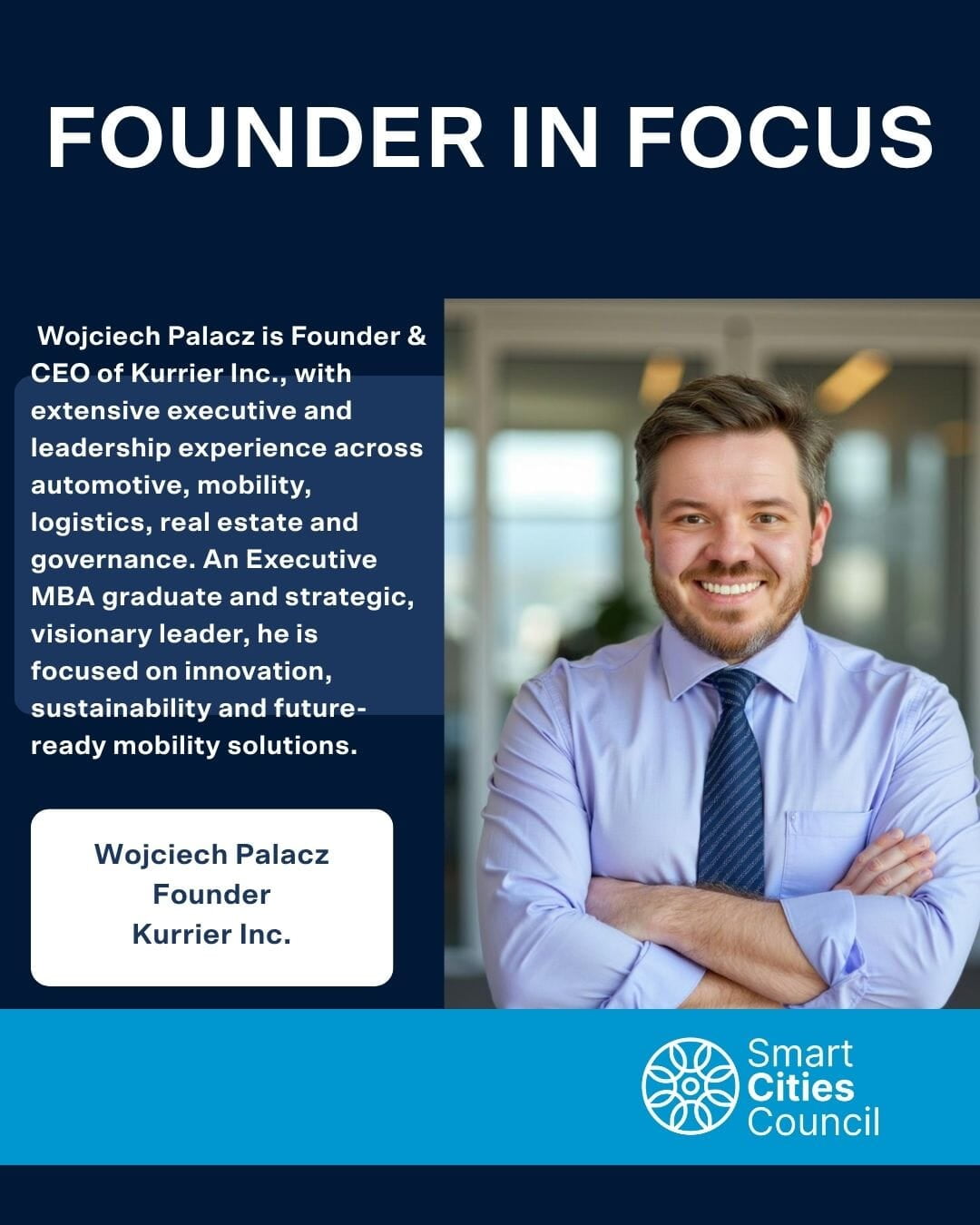
In this member feature, SCC CMO Len Costantini interviews Kurrier CEO and founder Wojciech Palacz about the moment that made a problem impossible to ignore - and shaped the future Kurrier is working toward.
Kurrier was born trackside - not in a boardroom.
Founder Wojciech Palacz was supplying motorsport teams with time-critical parts when a call came through that never arrives with a polite deadline: a part was needed now, because tomorrow was too late. In racing, one missing component can erase months of preparation in a single lap.
But the shipping system couldn’t move ad hoc. No instant pickup. No reliable “in-minutes” execution when the clock was screaming.
That gap - between how fast life moves and how slowly shipping starts - sparked a simple question: why is sending a parcel still harder than calling a ride?
Kurrier is building an on-demand pickup experience so people and small businesses can ship from wherever they are - without planning their day around drop-offs, vague windows, or depot runs.
Founder interview
1) Take me to the earliest moment this problem became real to you. Where were you, and what was happening?
Wojciech: It happened in motorsport, not in an office. I was running a company supplying race teams with parts such as tyres, brake pads -wide range of parts and consumables, and one afternoon we got the kind of call that never comes with a polite deadline: a part was needed now, because tomorrow was too late. On TV racing looks fast - behind the scenes it’s even faster: pure urgency, ambition, rivalry, and emotion.
In that world, as a supplier you become a quiet member of the team, carrying real responsibility for the result. And yet the shipping system couldn’t move ad hoc - no instant pickup, no reliable “in-minutes” execution when the clock was screaming. That gap - between how fast life moves and how slow shipping starts - was intensely frustrating, and it pushed me to start looking for a solution not just for me, but for anyone who needs to ship on demand.
2) What did you see then that most people still don’t see?
Wojciech: Most people think the shipping problem is about labels, rates, or tracking - but the real failure is pickup: the first mile is the bottleneck. Legacy couriers optimize for delivery density, so pickups are treated like leftovers on the route. That’s why even “premium” shipping often starts with waiting or driving somewhere yourself. The industry has digitized everything except the moment the parcel leaves your hands.
3) Who was carrying the burden at the time and why did it matter to you personally?
Wojciech: In my motorsport moment, the burden sat on the people who couldn’t afford delay: the team waiting in the paddock, the mechanic needing the part, the manager whose weekend depended on one shipment arriving in time, and the driver who had devoted his life to winning, where one missing part could erase months of preparation in a single lap.
When the first mile fails, the stress doesn’t land on the carrier - it lands on the customer and everyone downstream.
That mattered to me because in racing you don’t ship “when it’s convenient.” You ship because someone’s result, reputation, and months of work are on the line. But it’s not only about time-definite urgency - it’s about a permanent shift in consumer behavior: we expect everything instant now: rides, food, groceries, yet shipping never scaled to that expectation.
I saw the same pattern in big picture with consumers and small businesses - different stakes, same friction, and it convinced me the system is designed around routes, not around human needs.
“The system is designed around routes, not around human needs.”
4) What did it cost them?
Wojciech: Time first: minutes turn into hours, hours into days, and suddenly the return is still sitting there two weeks later. For SMEs, it’s opportunity cost - delayed shipments, delayed cash flow, delayed customer satisfaction.
There’s also a reputational cost: customers don’t blame “the courier system,” they blame the seller. And personally, it even costs pride - because the task is simple, yet the process makes you feel incompetent.
5) What sentence best captures what you felt in that moment?
Wojciech: Shipping shouldn’t start with a trip - but somehow it always does. Why sending a parcel today is still harder than calling a ride?
6) What was the breaking point that shifted from “this is a problem” to “I’m building the solution?"
Wojciech: It shifted when I realized this isn’t a small UX inconvenience - it’s a structural gap: nobody owns the pickup experience end-to-end.
The breaking point was seeing it repeatedly: even when you want to do the right thing - return the item, ship the package, send the document - the system pushes you into delay. I kept thinking: “If on-demand services can dispatch a driver in minutes, why can’t shipping dispatch a pickup?”
That contrast made the opportunity feel urgent and buildable. It wasn’t a new technology problem - it was an execution and marketplace coordination problem.
“Nobody owns the pickup experience end-to-end.”
8) What did you sacrifice first to get it moving?
Wojciech: Time mostly – to deliver the certainty. I leaned into building the blueprint: workflows, unit economics, GTM and the app prototypes instead of waiting for “the perfect moment.”
I also chose to commit to a path that’s operationally real - not just a software layer - which demands higher standards and more discipline. And I accepted that early progress would take time and require patience: prototypes, iteration, and relentless learning. This is all leading to a final polish while finding the right partners to help us launch and keep moving - because once we launch, we can’t stop.
9) What’s the strongest proof so far that it works?
Wojciech: The strongest proof is that the full journey is refreshingly obvious - we can demonstrate it end-to-end: instant quote → immediate pickup → verification → hub handoff → tracking - all inside one coherent and user centric system design. People often react with the same question: “Wait… nobody has this already?”
And it connects directly to behavior. A lot of us still don’t buy certain things online because we want to try or touch first - and returns are such a hassle that we avoid the loop entirely.
Now imagine executing a return in minutes, not days. Industry data suggests a meaningful share of cart abandonment is driven by unsatisfying return conditions - which means a “small” friction at the start isn’t small at all; it’s a massive hidden tax on e-commerce.
“Wait… nobody has this already?”
10) In 5–10 years, what becomes true that isn’t true today with Kurrier?
Wojciech: Shipping becomes sender-scheduled, not courier-scheduled. A package can be picked up in minutes with transparent multi-carrier choice - and the pickup feels as predictable as ordering a ride. Small businesses stop building their day around drop-offs and vague windows - they ship from wherever they are, when it matters, with proof and tracking in one place.
In the “after” world, the start of shipping is no longer the hardest part - it’s the fastest, available to everybody, everywhere - at home or abroad. And when logistics becomes increasingly autonomous - which I believe it will - Kurrier is built to plug into that future, ready with a system designed from day one with autonomy in mind.
The first mile becomes the fastest mile.
“Shipping becomes sender-scheduled, not courier-scheduled.”
11) You recently attended the SCC Silicon Valley Start-up and Investor Week in San Jose and San Francisco. What were your impressions/reflections on SVSIW overall?
Wojciech: SVSIW felt like an accelerator for clarity in relation to the US capital market. A market looking for fewer “nice businesses,” and more moonshots - but only the ones grounded in a real plan and real execution. The best moments were the candid conversations where experienced operators and investors pressure-tested assumptions and forced our story to sharpen.
My biggest personal takeaway was how much weight a genuine founder story adds: models and strategy matter, but an honest “why” gives everything else gravity. And it reinforced something simple: in a room full of smart people, your job isn’t to sound smart; it’s to make the idea so clear people can repeat it, believe it, and act on it.
Kurrier is building an on-demand first-mile pickup layer that makes sending and returning parcels feel as easy as calling a ride - starting with instant dispatch and a transparent, multi-carrier workflow.
Why this matters for smarter cities
Cities run on movement: people, services, information - and goods.
When shipping friction forces unnecessary trips, idle time, and repeated attempts, it adds avoidable congestion and inefficiency. A reliable first-mile pickup layer can support:
- Small business productivity, by removing daily drop-off routines and uncertain pickup windows
- Better urban logistics, by reducing unplanned trips and enabling more efficient aggregation
- Improved customer outcomes, especially where returns and time-sensitive deliveries affect participation in the local economy
Want to learn more about Kurrier or connect with the team?
- Website: www.kurrier.com
- Email: wojtek.palacz@kurrier.com
- Phone (work): +1 213 843 7377
- Phone (mobile): +48 668 833 388
- LinkedIn: https://www.linkedin.com/company/kurrier-inc/
Interested in highlighting your solution through Smart Cities Council? Explore upcoming programs and member opportunities.
About Smart Cities Council
Smart Cities Council is a global network of cities, governments, technology leaders, investors, and solution providers dedicated to enabling city and community transformation through governance, finance, technology, and partnerships that deliver measurable outcomes.
For more information on Smart Cities Council programs: